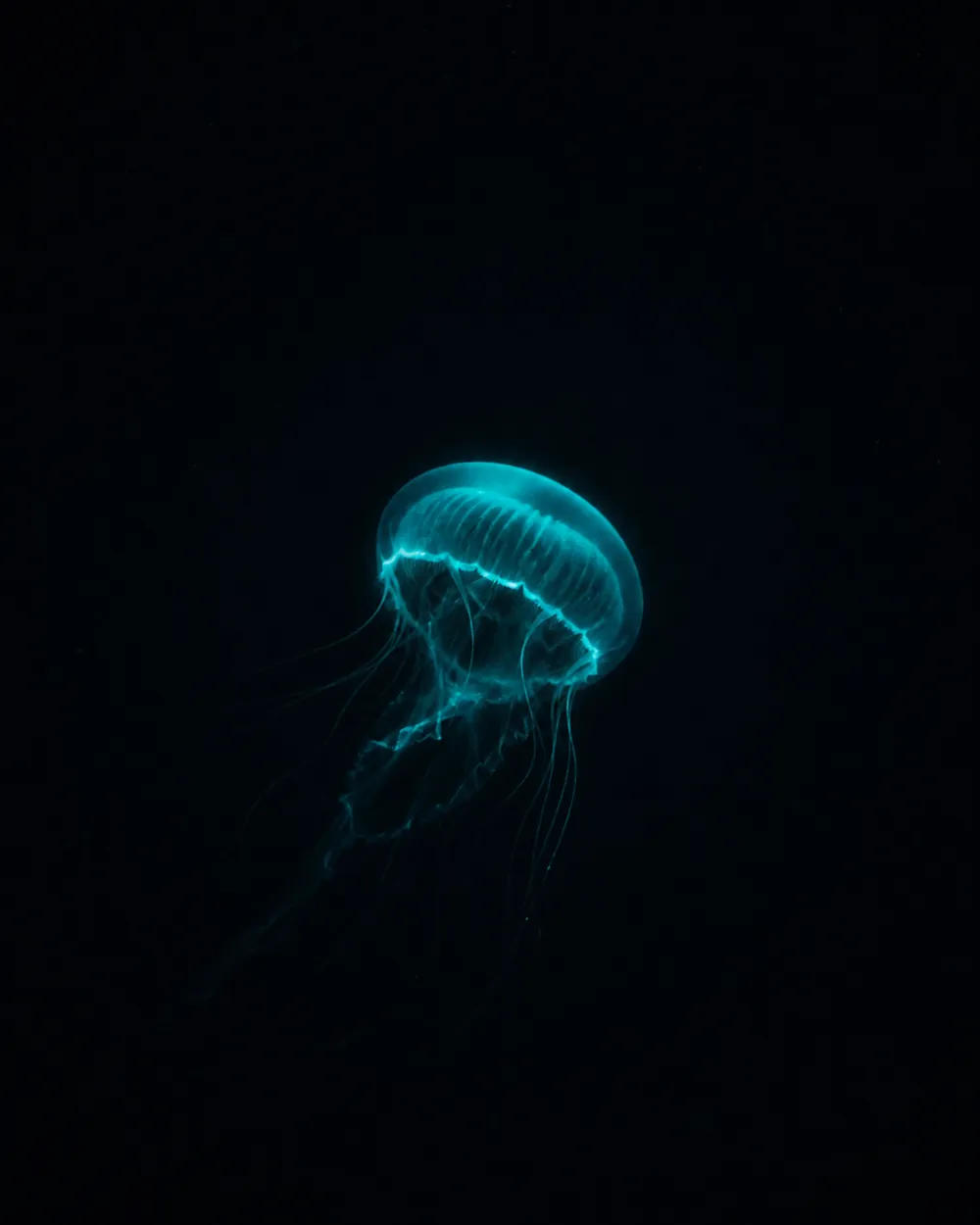
Crown jellyfishSPEC. 02·A
Depth≈ 700 m
Lightbioluminescent rim
Span30 cm
How deep can you gobefore the light gives out?
For the first two hundred metres, the sea still remembers the sun.
This is the only layer the light truly reaches — the thin, bright skin of a planet that is mostly dark water. Below it, everything we are about to meet has never seen a single day.
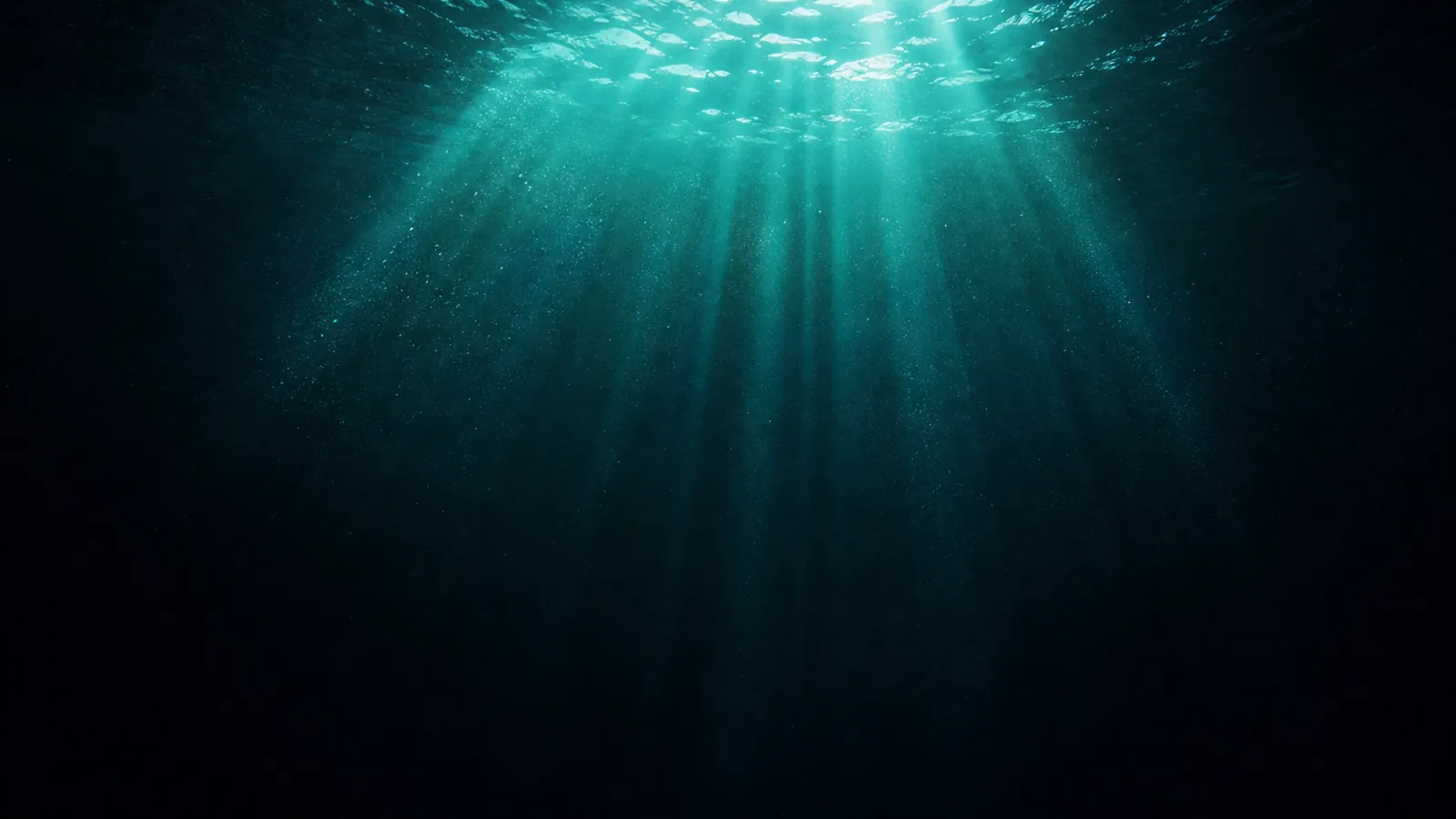
Colour leaves first. Then warmth. Then the sun — somewhere above a thousand metres — simply stops.
Past this point almost every living thing makes its own light. Keep scrolling — the deep goes on.
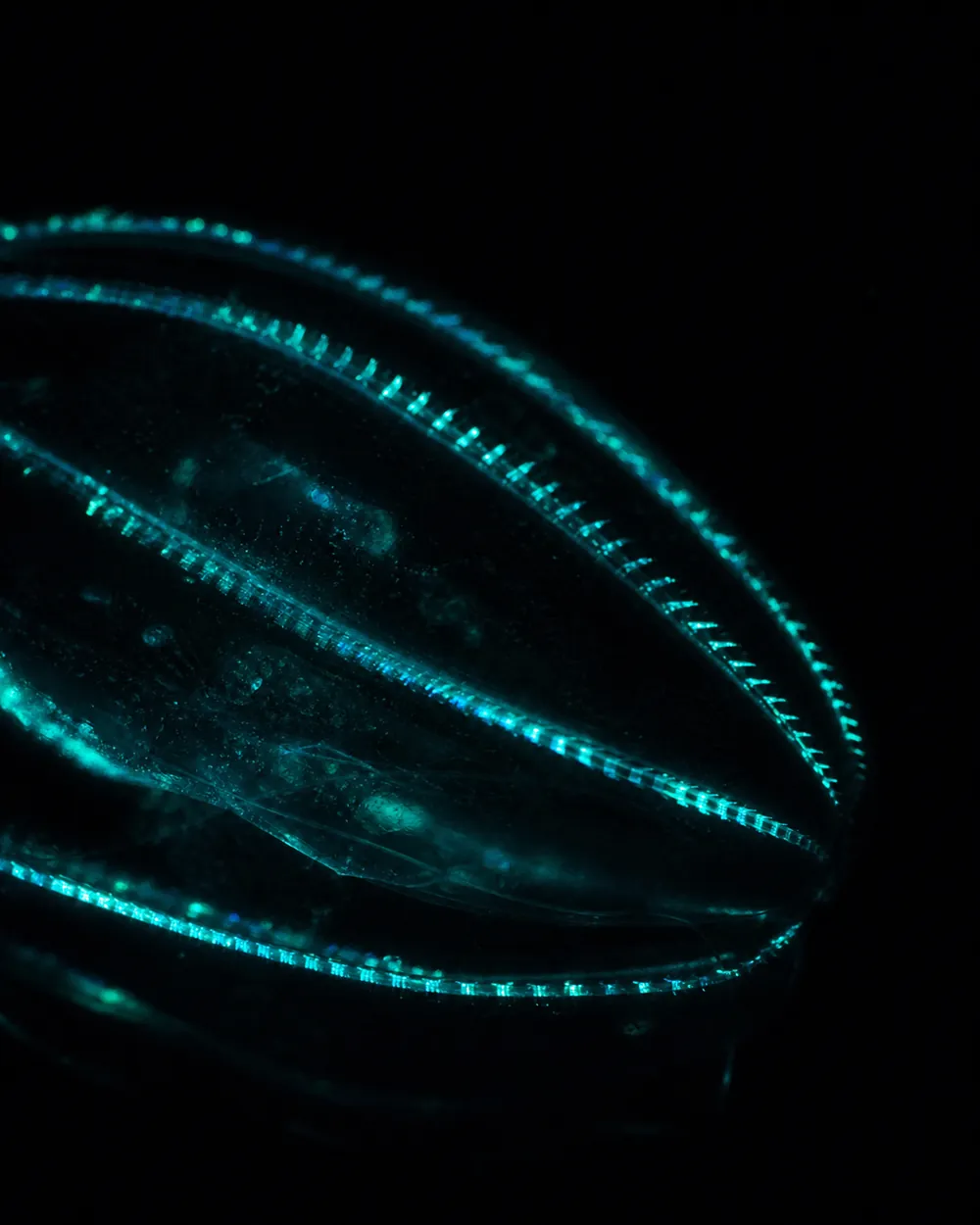
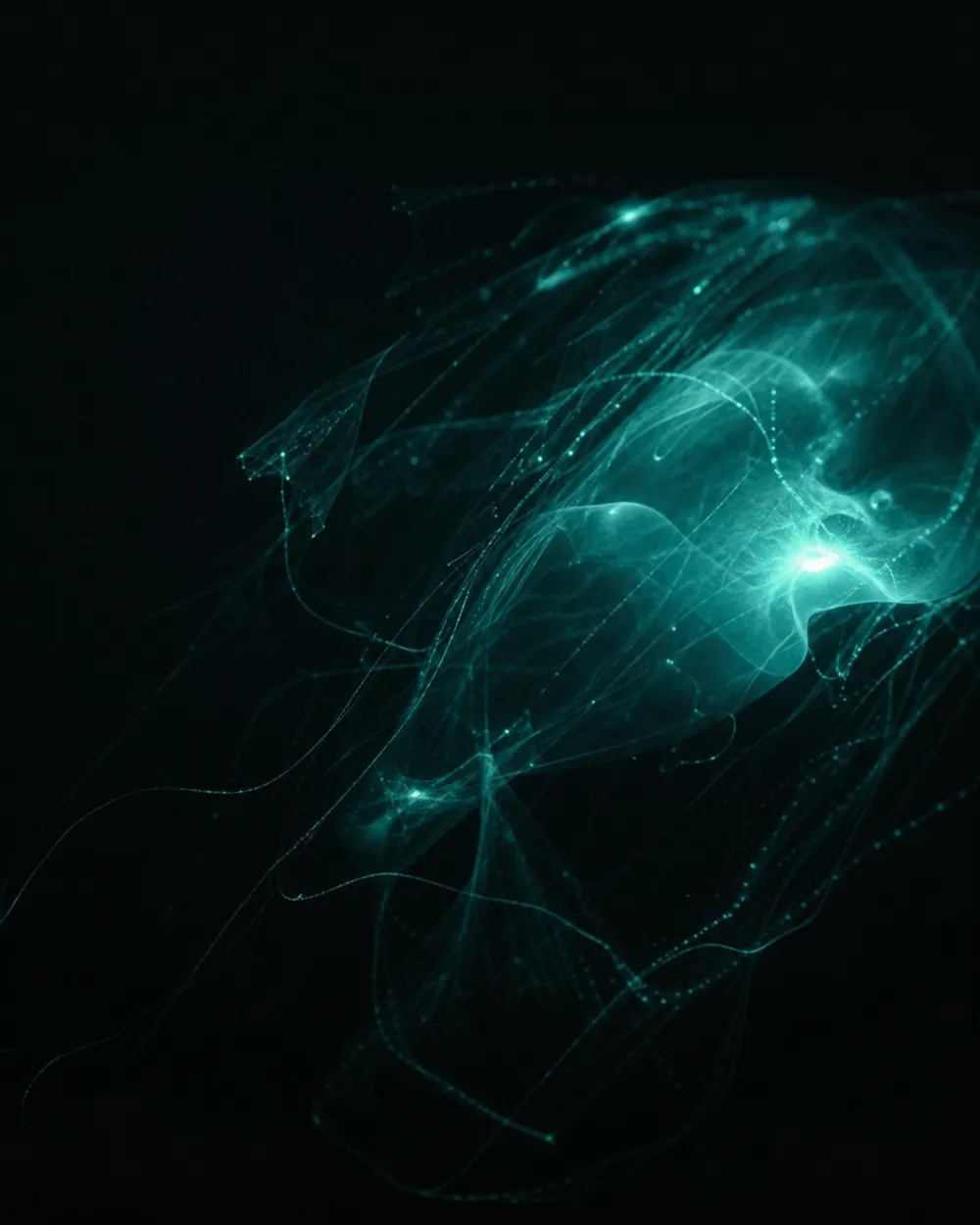
Most species down here have never been named.
The twilight zone may hold the greatest mass of fish anywhere on the planet — and we have described only a fraction of what lives in it.
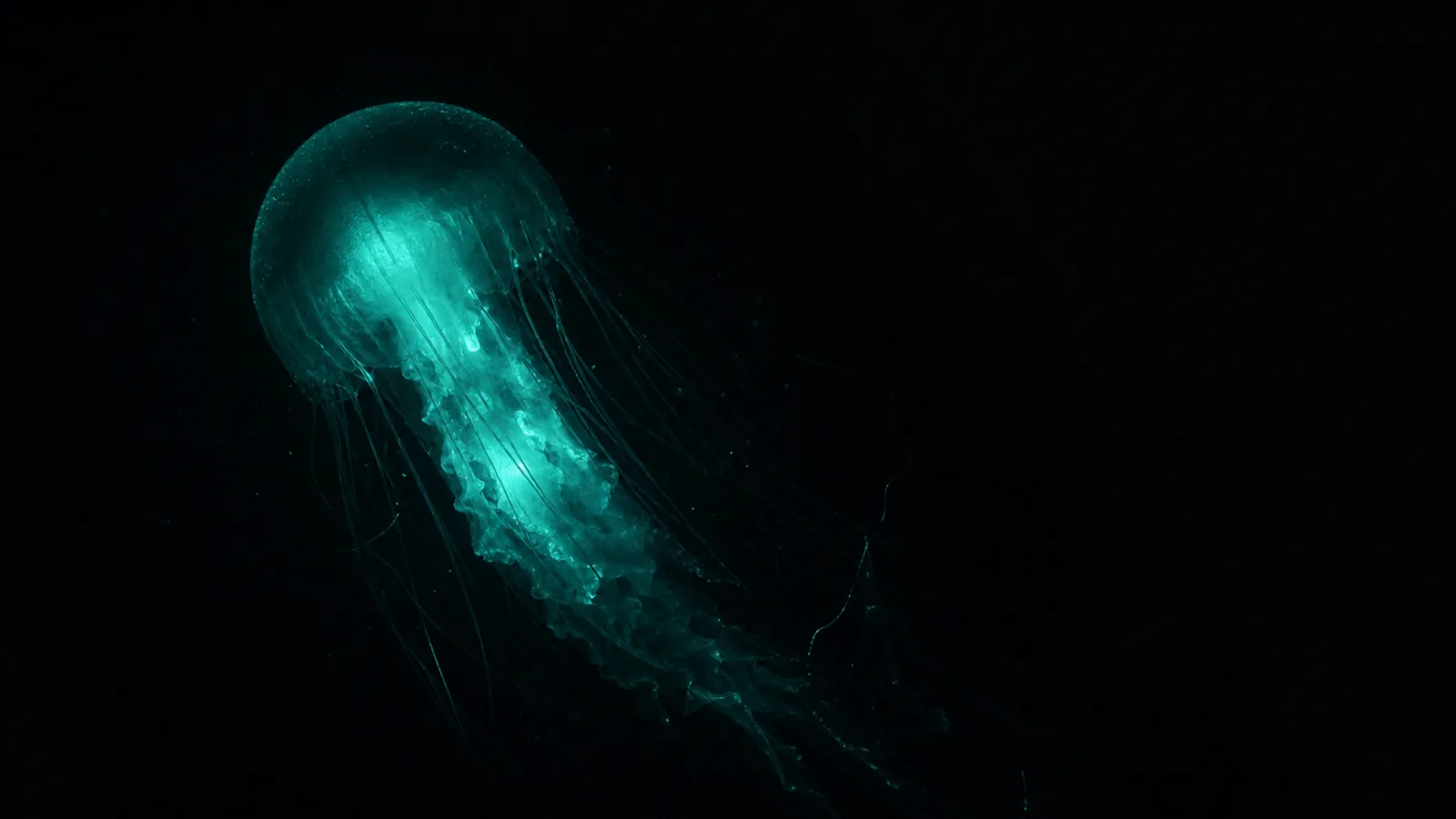
Below a thousand metres there is no sunlight at all — only the light that living things choose to make. It is the largest habitat on Earth, and we have seen almost none of it.
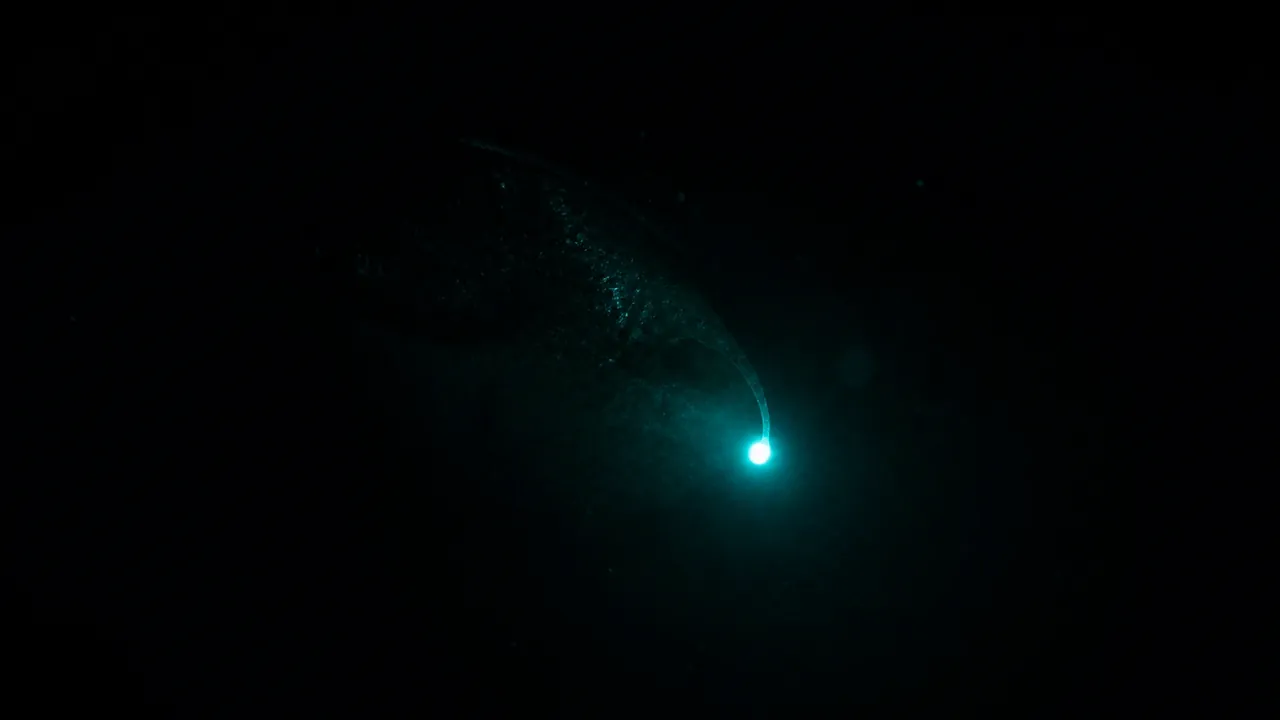
Down here, a single point of light is enough to hunt by — or to be hunted.
Bioluminescence is the common language of the deep: a lure, a warning, a mate's signal, a decoy. In the largest dark on the planet, light is never wasted.
Cold. Black. Crushing. And — against every expectation — alive.
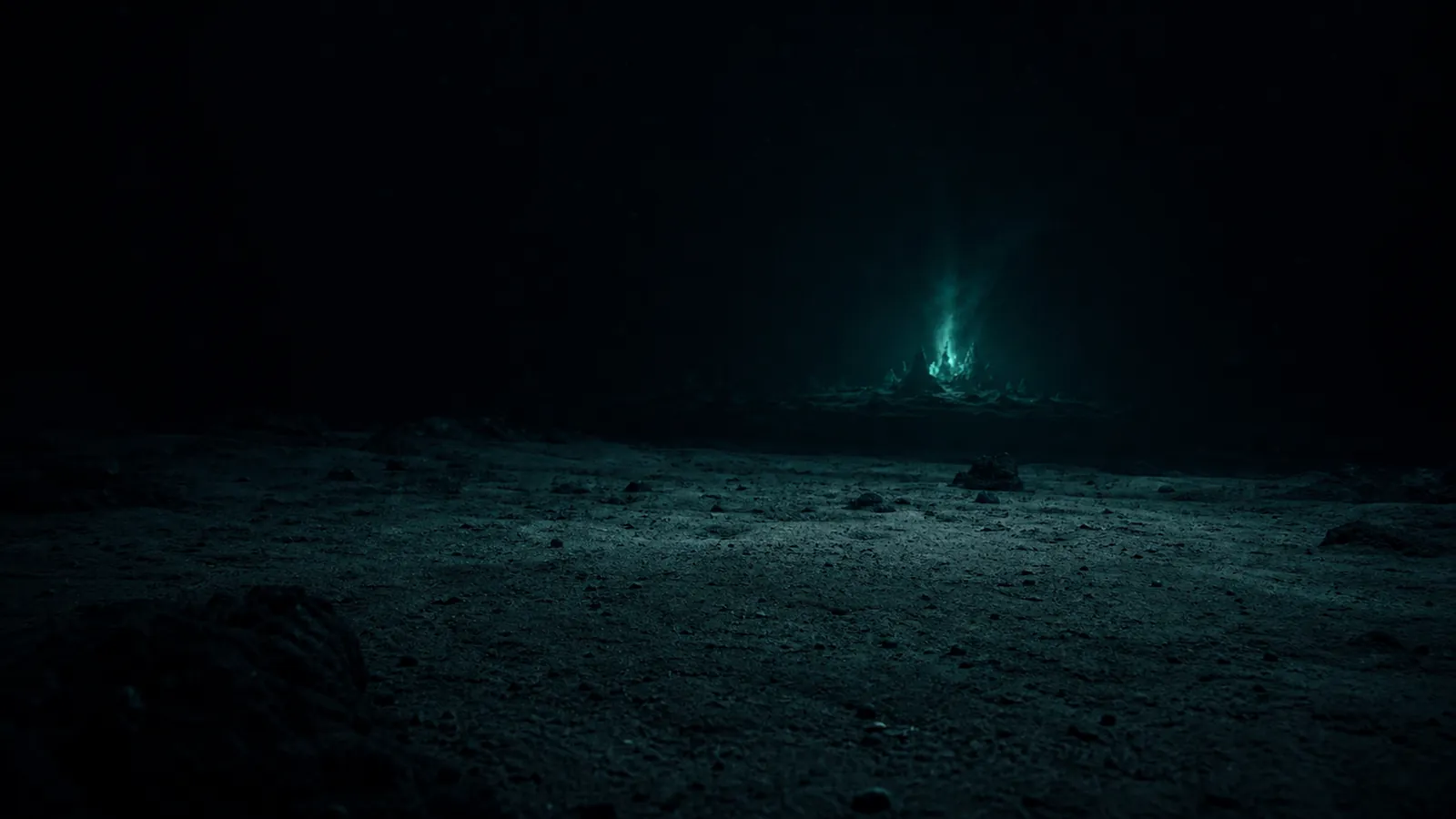
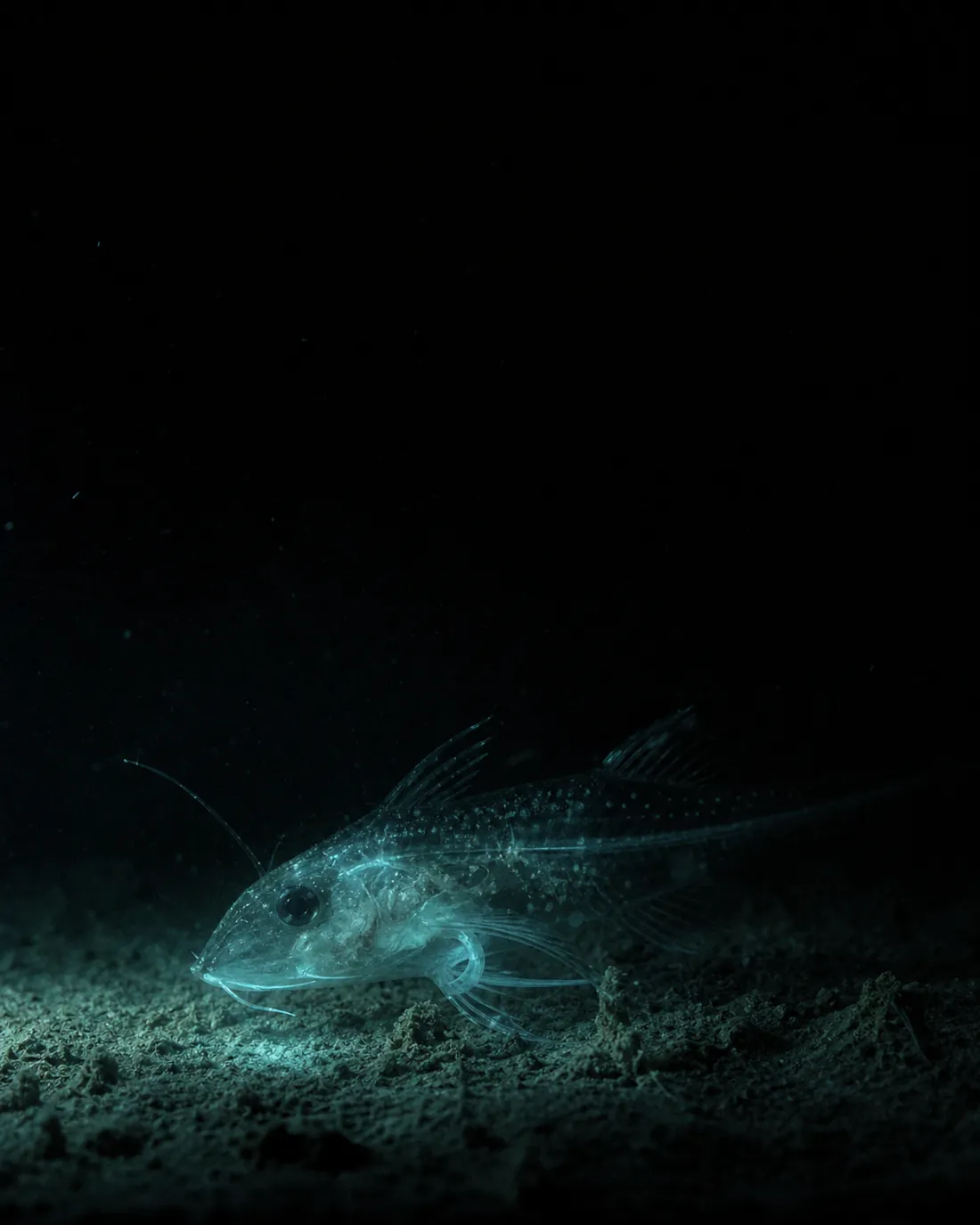
Named for Hades. Down here the trench lies further below the waves than Everest stands above them — permanent night, a pressure that would fold a submarine like paper, and pale, patient creatures drifting on regardless.
We have better mapsof the surface of Marsthan of our own ocean floor.
Resurface — return to 0 m